

ISO 22000 Explained: How to Get Certified and Protect Your Food Business
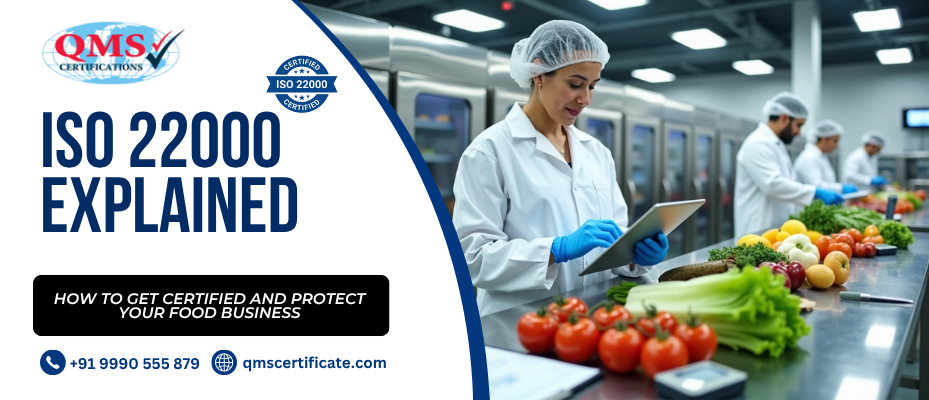
ISO 22000 Explained: How to Get Certified and Protect Your Food Business
How do you prove to buyers and export markets that your food business can control safety hazards at every stage?
ISO 22000 means having a globally recognized food safety management system that demonstrates your ability to identify and control food safety hazards across your entire operation. This standard covers organizations throughout the whole food chain, from farm to table.
While iso 22000 certification is voluntary, major buyers and export markets increasingly treat it as a baseline requirement for supplier approval. Implementation typically takes 6 to 12 months for mid-sized operations.
In this guide, we'll walk you through what ISO 22000 is, its core requirements, the certification benefits, and exactly how to get certified to protect your food business.
What Is ISO 22000 and Why It Matters for Your Food Business
1.Understanding the ISO 22000 Standard
ISO 22000 means having a food safety management system that specifies requirements for controlling food safety hazards throughout your operation. Developed by the International Organization for Standardization and established in 2005, this standard integrates HACCP principles with management system components .
The standard operates on two Plan-Do-Check-Act cycles working simultaneously. The first cycle covers your management system, while the second addresses operations including HACCP principles . ISO 22000 follows the High-Level Structure framework, using the same 10-clause structure as ISO 9001 for quality management and ISO 14001 for environmental management . This common structure includes scope, context of organization, leadership, planning, support, operation (covering HACCP and prerequisite programs), performance evaluation, and improvement .
With 51,535 total certified sites as per the ISO Survey 2022, ISO 22000 is the most popular voluntary food safety international standard in the food industry . The standard combines four key elements: interactive communication across the food chain, system management with documentation requirements, prerequisite programs for maintaining hygiene standards, and HACCP principles for hazard identification and control .
2.How ISO 22000 Differs from Basic HACCP
HACCP focuses entirely on identifying and controlling significant hazards in food production and handling. In contrast, ISO 22000 is a broader food safety management system that incorporates HACCP principles but extends beyond hazard control .
ISO 22000 addresses business processes and organizational structures, not just food safety .The standard introduces operational prerequisite programs (oPRPs) in addition to basic prerequisite programs and critical control points . This distinction allows you to control food safety hazards at critical points through systematic preventive actions .
Moreover, ISO 22000 is designed for compatibility with other management system standards, making integration with quality, environmental, or other management systems straightforward . Unlike HACCP, ISO 22000 is a certifiable standard that third-party bodies can audit to demonstrate compliance .
3.Who Needs ISO 22000 Certification
ISO 22000 certification applies to all organizations directly or indirectly involved in the food chain, regardless of size . This includes feed producers, primary producers, food manufacturers, transport and storage operators, retailers, caterers, and subcontractors .
The standard also covers inter-related organizations such as equipment producers, packaging material manufacturers, cleaning agents suppliers, additive and ingredient producers . Service providers including pest control companies, industrial laundry services, and cleaning service suppliers can implement ISO 22000 .
Core Requirements and Elements of ISO 22000
Implementing ISO 22000 certification requires meeting specific structural and operational requirements that form the backbone of your food safety management system.
>Management System Structure and Leadership
Top management must demonstrate visible leadership and commitment to the FSMS by establishing a food safety policy compatible with your organization's strategic direction. Leadership responsibilities include ensuring FSMS objectives are set, integration with business processes occurs, and necessary resources remain available. You need to communicate the importance of effective food safety management, conform to statutory and regulatory requirements, and direct personnel to contribute to system effectiveness. Management must support other leadership roles to demonstrate their responsibilities within assigned areas.
>Prerequisite Programs (PRPs)
PRPs are basic conditions and activities necessary to maintain a hygienic environment throughout your operation. These programs prevent contamination before hazards emerge. Common examples include facility construction and layout, utilities control, pest management, waste disposal, equipment maintenance, personnel hygiene, and cross-contamination prevention. ISO 22000 distinguishes between standard PRPs and operational prerequisite programs (oPRPs). While PRPs maintain general hygiene standards, oPRPs control specific food safety hazards at critical points through systematic preventive actions.
>HACCP Integration and Hazard Control
ISO 22000 uses a two-level assessment approach for hazard control. At the first level, you identify hazards and assess their severity and likelihood to evaluate the need for control measures. At the second level, you assess the severity and likelihood of control measure failure to determine if critical limits, monitoring, and corrections are needed. This structured approach helps you distinguish between CCPs requiring measurement and oPRPs where observations suffice.
>Documentation and Traceability Systems
Your system must maintain traceability capable of identifying material origins, processing history, and distribution routes. Documentation includes the food safety policy, HACCP plan, hazard control plan, monitoring records, verification records, internal audit reports, and management review records.
>Internal Audits and Performance Evaluation
Internal audits must occur at least once per year to monitor continuous FSMS effectiveness. Trained auditors cannot audit departments where they hold direct responsibilities. You need to analyze audit data, identify trends, evaluate performance, review risks and objectives, and decide on improvement actions.
Benefits of ISO 22000 Certification for Food Businesses
Certification delivers measurable improvements across safety performance, market positioning, operational metrics, and legal standing.
Enhanced Food Safety and Risk Management
ISO 22000 certification means adopting a systematic framework that identifies and controls food safety hazards throughout your supply chain. Organizations see significant reductions in contamination risks and foodborne illness incidents. Research shows facilities implementing the standard experienced a 45% reduction in non-compliance incidents . Downtime decreased from 110 hours per month to 95 hours per month, representing a 13.6% improvement . The standard integrates HACCP principles in an improved form to create a more effective auditable system, enabling you to track hazards and implement precautionary measures before they threaten consumer health.
Market Access and Customer Confidence
Certification opens doors to international markets and large-scale buyers who require ISO 22000 as a supplier prerequisite. The standard is recognized worldwide as a benchmark for food safety management systems, facilitating trade and export opportunities. Customers gain tangible evidence of your commitment to food safety excellence, which builds trust and confidence in your products. This credibility translates to competitive advantages, increased sales, and stronger brand reputation. Certification demonstrates transparency and accountability, factors that drive customer satisfaction and long-term loyalty.
Operational Efficiency and Cost Savings
Implementation results in increased efficiency and product quality while reducing costs . The systematic approach streamlines processes, improves resource utilization, and reduces waste. Organizations eliminate inefficiencies through standardized procedures, resulting in fewer errors and customer complaints. Better documentation practices and clearer role definitions contribute to productivity gains. The proactive hazard control approach prevents costly product recalls and rejections.
Regulatory Compliance and Legal Protection
ISO 22000 aligns with national and international food safety regulations, reducing the risk of penalties and legal liabilities. Certification demonstrates due diligence in food safety management, providing written compliance records that serve as legal safeguards during product complaints or regulatory inspections.
Step-by-Step Guide to Getting ISO 22000 Certified
Getting certified requires following a structured implementation path from initial assessment through ongoing maintenance.
Conduct a Gap Analysis
Performing a gap analysis compares your current food safety practices against ISO 22000 requirements. This assessment identifies discrepancies in documentation, risk assessments, operational controls, and system maturity. You can conduct this analysis internally or engage external consultants. Prioritize identified gaps based on urgency and impact to develop an actionable improvement plan.
Build Your Food Safety Team
Appoint a multidisciplinary food safety team with a designated leader and deputy leader. Team members should represent production, quality assurance, microbiology, sanitation, maintenance, procurement, and human resources. Ensure personnel possess necessary competence through education, training, skills, and experience in HACCP principles and ISO 22000 requirements.
Develop Prerequisite Programs and HACCP Plan
Establish PRPs covering facility construction, utilities, pest control, personnel hygiene, and equipment maintenance. Subsequently, conduct hazard analysis identifying biological, chemical, and physical hazards. Determine critical control points, establish critical limits, and document monitoring procedures.
Implement and Document Your System
Implement developed procedures across your operation. Document your food safety policy, HACCP plan, monitoring records, corrective actions, and traceability system. Conduct internal audits to verify system effectiveness before external assessment.
Choose a Certification Body and Prepare for Audit
Select an accredited certification body recognized by national authorities or IAF member organizations. Verify their experience in your food sector and audit methodology. The two-stage audit process includes document review followed by on-site implementation assessment.
Maintain Your Certification Through Surveillance Audits
Surveillance audits occur annually to verify continued compliance. Recertification requires a full audit every three years.
Contact Details
🌐 Website: https://www.qmscertificate.com/
📍 Location: Shop 8 Basements taneja complex nangloi metro station 110041, Rohtak Rd, Nangloi, New Delhi, Delhi 110041
📞 Call Now: +91 9990 555 879
📧 Email: qmscertify@gmail.com
FAQs
Q1. What is ISO 22000 certification?
ISO 22000 is a food safety standard that ensures safe production and handling of food.
Q2. Who needs ISO 22000 certification?
Food manufacturers, restaurants, suppliers, exporters, and packaging companies.
Q3. How long does it take?
Usually 6 to 12 months depending on business size.
Q4. Is ISO 22000 mandatory?
No, but it is highly recommended for business growth and exports.
Q5. What is the validity of ISO 22000?
It is valid for 3 years with annual audits.
Conclusion
You now have a complete roadmap to achieve ISO 22000 certification for your food business. The implementation process typically takes 6 to 12 months, but the benefits are worth the investment.
Obviously, certification enhances your food safety controls, opens international markets, and builds customer confidence. Start with a gap analysis, build your team, and choose an accredited certification body.
Take the first step today, and you'll protect both your customers and your business reputation for years to come.
Having any Query? Talk to our Experts
Our Projects are fully tested, background checked, license validated and insured
with a 100% satisfaction guarantee.
Contact Info
 qmscertify@gmail.com
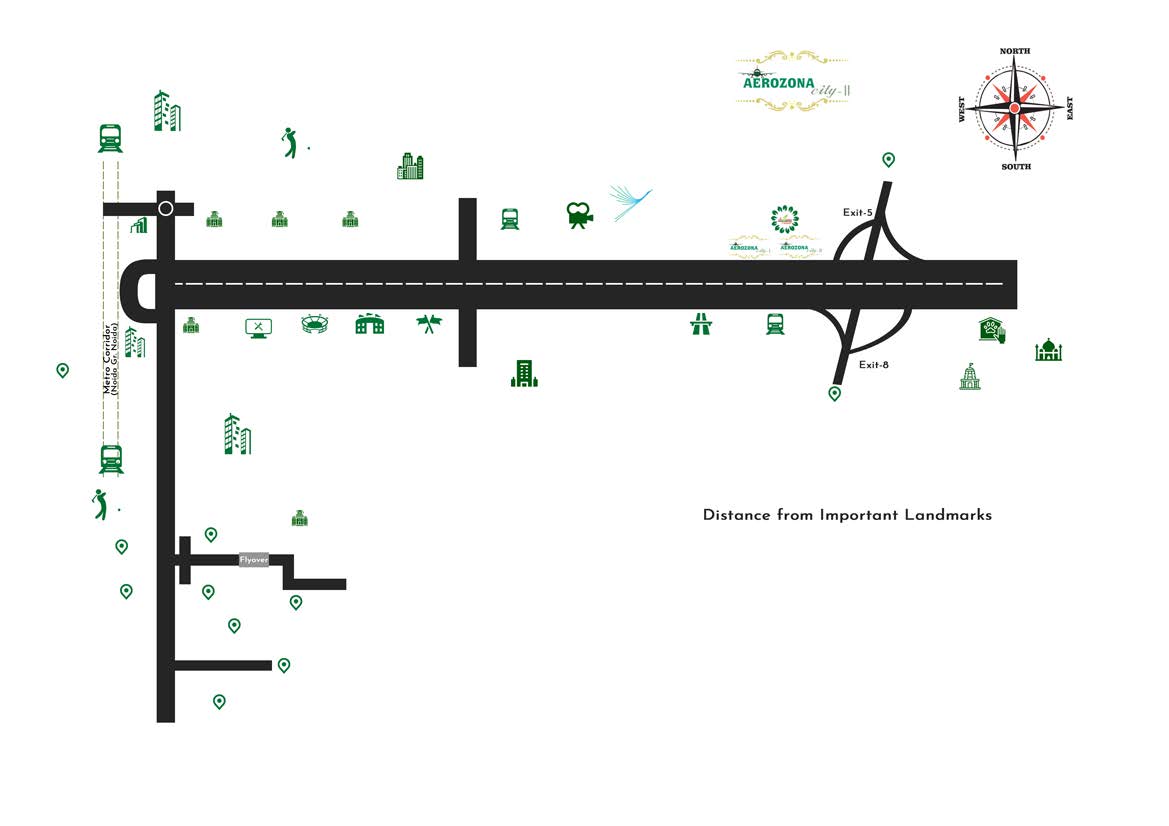 View Location Map