

7 Hidden Benefits of ISO Certification No One Tells You
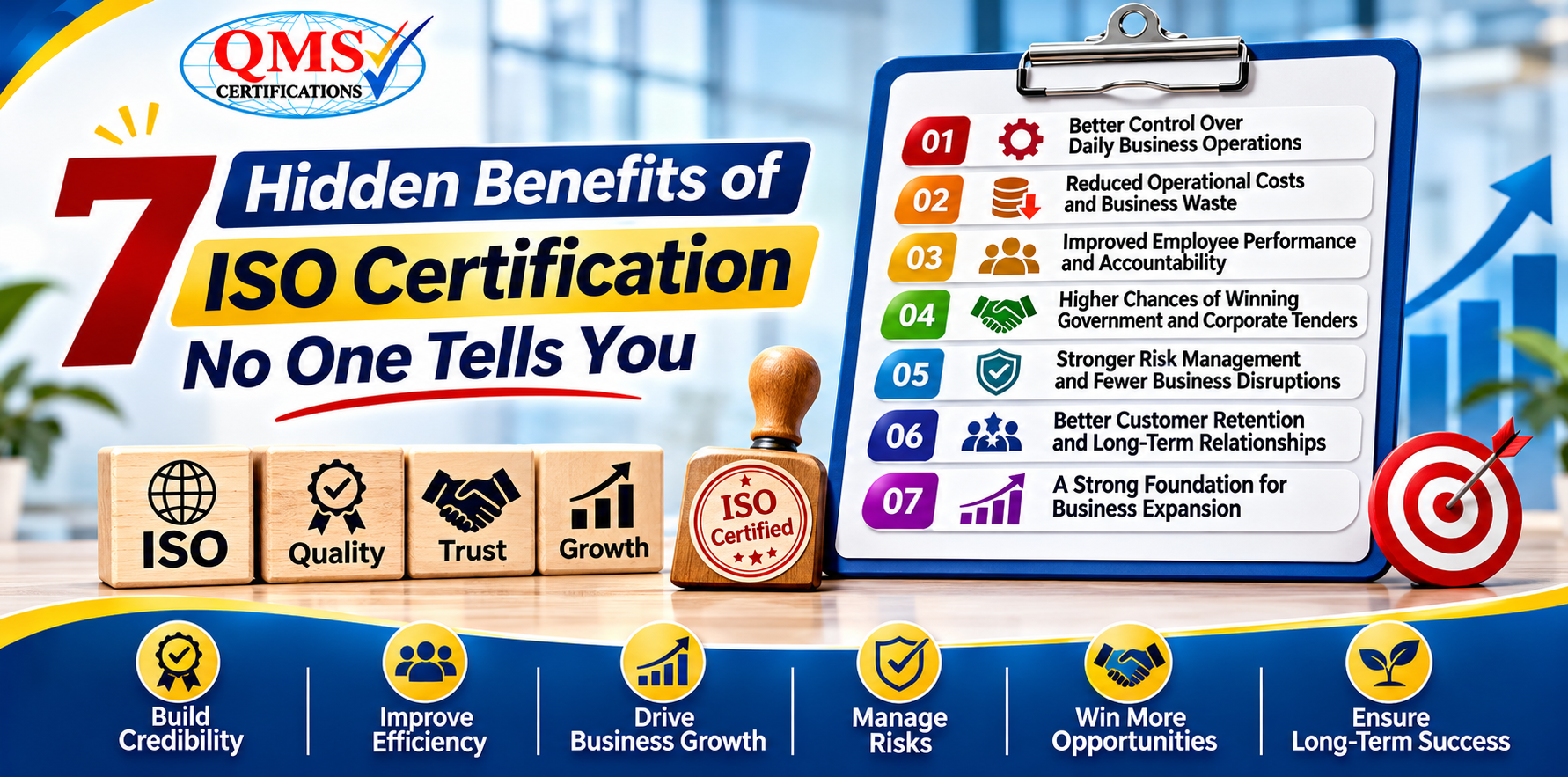
7 Hidden Benefits of ISO Certification No One Tells You
Introduction
When business owners think about ISO certification, the first things that usually come to mind are better credibility, improved customer trust and meeting tender requirements. While these are important advantages, the actual benefits of ISO certification go much further than simply receiving a certificate.
ISO certification helps businesses improve their internal processes, reduce operational mistakes, manage risks and build a more professional working environment. It provides a structured approach to managing quality, safety, information security and other important business activities.
For example, an Indian manufacturing company may struggle with product rejection, inconsistent quality and delayed deliveries. By implementing an appropriate ISO management system, the company can establish standard procedures, monitor performance and identify problems before they affect customers.
Whether you operate a manufacturing unit, IT company, construction business, consultancy or small enterprise, understanding the benefits of ISO certification can help you make a better business decision.
Let's explore seven lesser-known advantages that can make a real difference to your business.
1. Better Control Over Daily Business Operations
One of the most valuable benefits of ISO certification is improved control over everyday business activities.
Many businesses depend heavily on individual employees rather than documented processes. When an experienced employee leaves, important operational knowledge may also disappear.
ISO management systems encourage businesses to establish documented procedures, responsibilities and work instructions.
This helps businesses:
-
Standardise daily operations.
-
Reduce dependency on individual employees.
-
Maintain consistent work quality.
-
Improve coordination between departments.
-
Avoid confusion about roles and responsibilities.
For example, a manufacturing company can create standard procedures for purchasing raw materials, production inspections and final product approvals. Employees can follow the same process instead of relying on personal working methods.
2. Reduced Operational Costs and Business Waste
ISO certification is not just about maintaining quality; it can also help businesses control unnecessary expenses.
Poor processes often result in material wastage, repeated work, product rejection, customer complaints and production delays.
An effective ISO management system helps identify the reasons behind these problems and encourages corrective action.
Some potential improvements include:
-
Lower product rejection rates.
-
Reduced material wastage.
-
Better utilisation of equipment.
-
Fewer customer complaints.
-
Improved employee productivity.
For example, an Indian packaging manufacturer may discover that incorrect machine settings are responsible for repeated product defects. By monitoring production parameters and maintaining proper records, the company can reduce avoidable losses.
The financial benefits depend on how effectively the management system is implemented and maintained.
3. Improved Employee Performance and Accountability
Employees perform better when they understand their responsibilities and have clear instructions.
ISO certification encourages organisations to define job responsibilities, identify training requirements and evaluate employee competence.
Instead of expecting employees to learn everything informally, businesses can establish structured training and performance monitoring systems.
This can result in:
-
Clear employee responsibilities.
-
Better communication between teams.
-
Improved workplace discipline.
-
Fewer operational misunderstandings.
-
Better awareness of quality objectives.
For example, a service company can introduce a standard customer complaint-handling procedure. Every employee knows how to register, investigate and resolve customer complaints.
This creates a more organised working environment and improves service consistency.
4. Increased Chances of Winning Government and Corporate Tenders
This is one of the most commercially valuable benefits of ISO certification, particularly for Indian businesses.
Many government departments, public sector organisations and large private companies include ISO certification requirements in their vendor registration or tender eligibility criteria.
Depending on the tender, businesses may be asked to provide ISO 9001, ISO 14001, ISO 45001 or another relevant management system certification.
Having the appropriate ISO certification can help your organisation:
-
Meet specified vendor qualification requirements.
-
Strengthen its business profile.
-
Improve eligibility for certain tenders.
-
Build confidence among corporate buyers.
-
Present a more professional business image.
However, ISO certification does not automatically guarantee tender approval or contract awards. Businesses must also satisfy the other eligibility, technical and financial requirements.
5. Stronger Risk Management and Fewer Business Disruptions
Every business faces risks, whether related to product quality, employee safety, information security, environmental impact or supplier performance.
A major benefit of ISO certification is that it encourages organisations to identify risks before they become serious problems.
For example:
-
ISO 9001 helps organisations address risks affecting product and service quality.
-
ISO 14001 provides a framework for managing environmental responsibilities.
-
ISO 45001 supports occupational health and safety management.
-
ISO/IEC 27001 helps organisations manage information security risks.
A company implementing these standards can identify potential problems, assign responsibilities and establish appropriate controls.
This proactive approach can reduce disruptions and help businesses maintain more reliable operations.
6. Better Customer Retention and Long-Term Relationships
Getting new customers is important, but retaining existing customers is equally valuable.
Customers expect consistent product quality, timely delivery, reliable communication and effective complaint resolution.
ISO certification helps businesses establish systems to monitor customer satisfaction and address recurring problems.
For example, an Indian engineering supplier serving automobile manufacturers may receive repeated complaints about incorrect product dimensions. A structured quality management system can help identify the root cause, introduce corrective measures and prevent similar problems.
Over time, consistent performance can strengthen customer confidence and support long-term business relationships.
7. Creates a Strong Foundation for Business Expansion
A business that operates without standard processes may find it difficult to manage increasing orders, additional employees or new branches.
ISO certification encourages businesses to create systems that can be monitored, reviewed and improved as operations grow.
This is particularly useful for:
-
Small businesses planning to expand.
-
Manufacturers entering new supply chains.
-
Service providers targeting corporate clients.
-
Startups preparing for larger operations.
-
Indian companies exploring international markets.
For example, a small manufacturing business may initially manage production through verbal instructions. As its customer base grows, standard operating procedures, inspection records and documented responsibilities become increasingly important.
ISO certification helps establish a structured foundation for sustainable growth.
Why Choose QMS Certificate for ISO Certification?
Selecting the right ISO certification support provider is an important step towards implementing an effective management system.
At QMS Certificate, the focus is on helping businesses understand the applicable ISO standard and navigate the certification process with clarity.
Reasons to consider our support include:
-
Guidance on selecting the appropriate ISO standard.
-
Assistance with documentation and implementation requirements.
-
Support in understanding the certification audit process.
-
Guidance on corrective actions and compliance.
-
Assistance for different business types and industries.
-
Clear communication throughout the certification journey.
Our objective is to help organisations understand ISO requirements and work towards establishing a management system that supports their business operations.
Step-by-Step ISO Certification Process in India
The ISO certification process generally involves the following stages:
Step 1: Identify the Applicable ISO Standard
Choose the ISO standard according to your business activities and requirements.
Examples include ISO 9001 for quality management, ISO 14001 for environmental management and ISO 45001 for occupational health and safety.
Step 2: Understand Existing Business Processes
Review your current operations, identify gaps and understand what changes are needed to meet the selected standard.
Step 3: Prepare Required Documentation
Develop relevant policies, procedures, records and other documented information required by the applicable management system.
Step 4: Implement the Management System
Put the documented procedures into practice. Provide employee awareness and training wherever required.
Step 5: Conduct an Internal Audit
Evaluate whether the management system is working effectively and identify areas that need improvement.
Step 6: Complete the Certification Audit
An independent certification body assesses whether your management system meets the applicable ISO standard.
Step 7: Certification Decision and Issuance
After successful completion of the audit and resolution of applicable nonconformities, the certification body makes the certification decision and issues the certificate.
Important: ISO itself does not issue certificates to individual companies. Certification is provided by independent certification bodies. Always verify the certification body's accreditation and the applicable scope of certification.
Documents Required for ISO Certification in India
The documents required depend on the ISO standard, company size, business activities and certification scope.
Commonly required documents include:
-
Company registration certificate or applicable business registration proof.
-
PAN card or other applicable business identification.
-
GST registration certificate, where applicable.
-
Business address proof.
-
Details of products and services.
-
Organisational structure and employee responsibilities.
-
Quality policy or relevant management system policy.
-
Management system objectives.
-
Process procedures and work instructions.
-
Risk assessment and evaluation records, as applicable.
-
Employee training and competence records.
-
Internal audit reports.
-
Management review records.
-
Corrective action records, where applicable.
Not every document is mandatory for every ISO standard. The documentation should be based on the actual requirements of the applicable standard.
Frequently Asked Questions (FAQs)
1. What are the main benefits of ISO certification for a business?
The main benefits include improved operational efficiency, better customer satisfaction, stronger business credibility, reduced errors, improved risk management and access to certain business opportunities.
2. Is ISO certification beneficial for small businesses in India?
Yes. Small businesses can benefit from standardised processes, better quality control, improved customer confidence and more organised business operations. The management system should be appropriate to the organisation's size and activities.
3. Does ISO certification help in getting government tenders?
Some government and corporate tenders specify particular ISO certifications as eligibility or evaluation requirements. However, certification alone does not guarantee tender selection.
4. How long does it take to get ISO certification in India?
The timeline depends on the selected standard, business size, operational complexity, documentation readiness and audit arrangements. Smaller organisations with prepared processes may complete the process faster than complex organisations.
5. Is ISO certification mandatory for every company?
No. ISO certification is generally voluntary unless a particular law, regulatory requirement, contract or tender makes a specific certification necessary.
Conclusion: Make ISO Certification an Investment in Business Growth
The real benefits of ISO certification are not limited to receiving a certificate or displaying an ISO logo on your website. Its greater value lies in building organised processes, improving employee performance, reducing operational problems and developing customer confidence.
For Indian businesses looking to improve their working systems, compete for corporate opportunities and prepare for long-term expansion, ISO certification can be a valuable business investment.
If you are planning to obtain ISO certification for your organisation, QMS Certificate can help you understand the applicable requirements and certification journey.
Take the next step towards a more organised and quality-focused business.
Website: https://www.qmscertificate.com/
Email: info@qmscertificate.com
Contact QMS Certificate today to discuss the right ISO certification for your business.
Having any Query? Talk to our Experts
Our Projects are fully tested, background checked, license validated and insured
with a 100% satisfaction guarantee.
Contact Info
 qmscertify@gmail.com
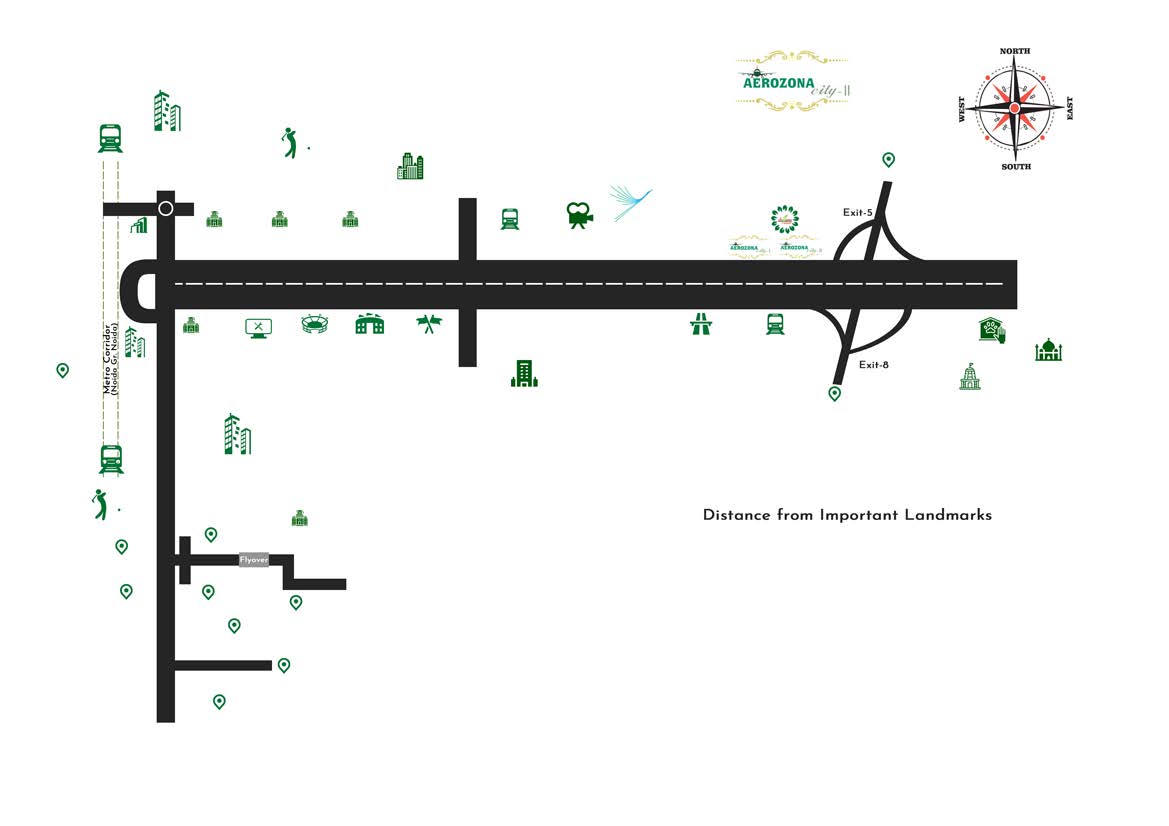 View Location Map


